AI hallucinations: why chatbots make things up
AI chatbots sometimes state false things with confidence. Learn why it happens, what a real court case shows and a checklist to catch errors.
By Hassan Mamoon · · 4 min read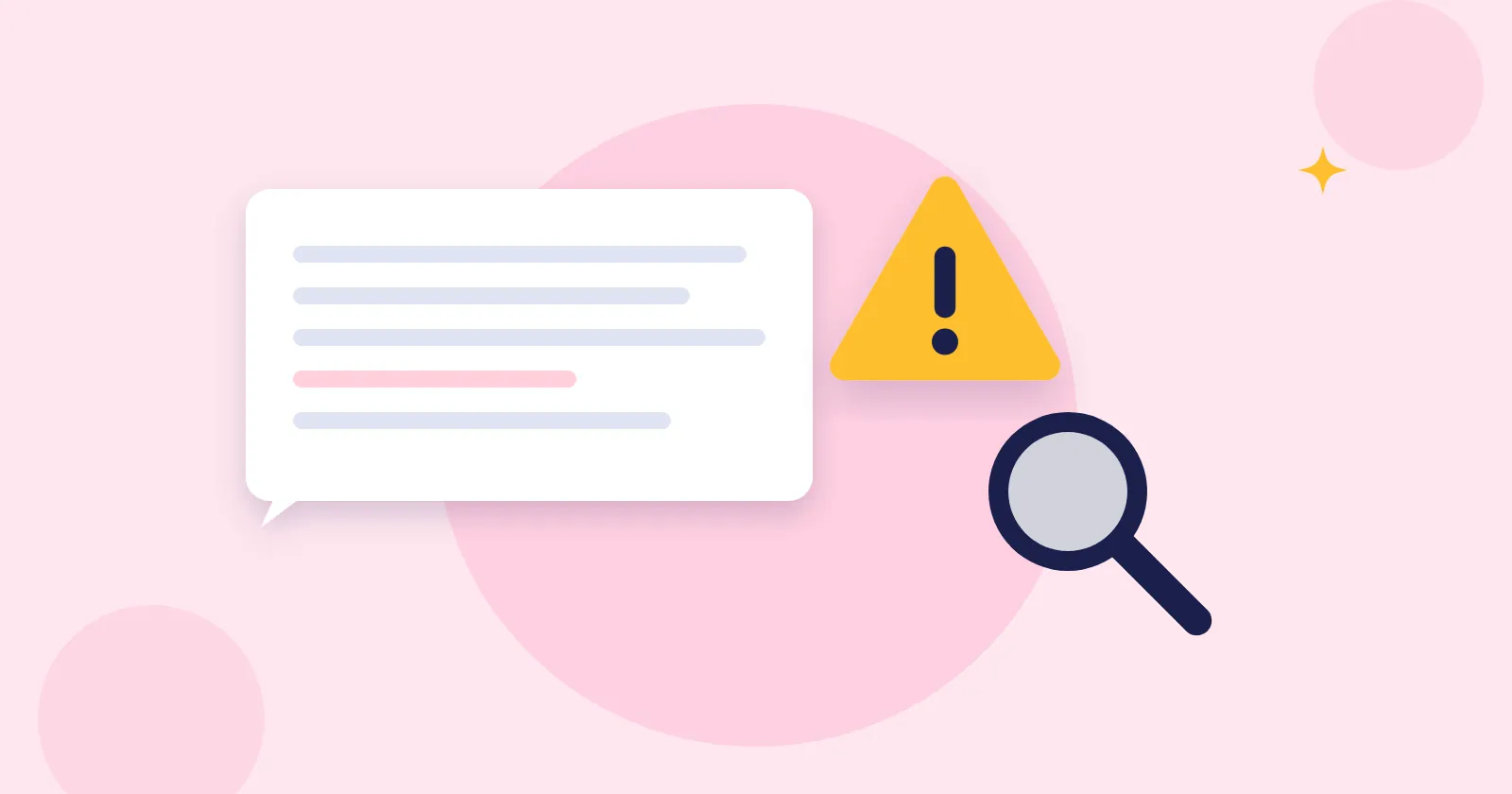
You ask a chatbot for a source and it gives you a title, an author and a year. It looks perfect. Then you search for it and it does not exist. That is a hallucination, and every AI chatbot can do it. You cannot stop it from happening, but you can make it rare and catch it when it does.
What is an AI hallucination?
An AI hallucination is when a chatbot states something false as if it were true: a made-up fact, number, quote, web address or source. Our AI glossary defines it the same way. The answer is usually fluent and confident, which is exactly why it is easy to believe.
Why chatbots make things up
A language model writes by predicting what text is likely to come next, based on patterns it learned from a huge amount of writing. It is built to produce plausible text. It is not built to look facts up and check them. When it does not know something, it can still produce an answer that sounds right.
Public chatbots also do not automatically check a citation against a database of real sources, so an invented reference can look just like a genuine one. Some chatbots can now search the web, which helps with recent events, but the model can still misread or misquote what it finds.
A real example: the lawyers and the fake cases
In 2023, lawyers in a New York federal court filed a brief that cited court cases ChatGPT had invented. In the case known as Mata v. Avianca, the judge fined the lawyers and their firm $5,000 in an order dated 22 June 2023, as widely reported. The cases did not exist, and nobody had checked.
Legal commentators have reported many similar incidents since. The lesson is not "never use AI". It is that you are responsible for what you submit, share or act on, so you have to check it.
Where hallucinations are most likely
| Type of claim | Risk | Why |
|---|---|---|
| Citations, links and sources | High | The model can invent one that looks real |
| Exact quotes | High | It often paraphrases and presents it as a quote |
| Statistics, dates and figures | Medium to high | Numbers are easy to get slightly wrong |
| Niche, local or very recent facts | High | Less in its training, or after its cut-off date |
| Code and maths | Medium | It can be wrong, but you can test the result |
| Common general knowledge | Lower | Still not zero |
| A summary of text you pasted in | Lower | It can still miss a point or add a detail |
A seven-step checking routine
- Decide the stakes. A pub-quiz answer needs less checking than a medical, legal, money or work decision.
- Ask for sources, then open them. A source you have not opened is not a source.
- Check names, numbers and dates against a reliable site.
- Search the exact quote in quotation marks. If nothing comes up, treat it as unverified.
- Ask the chatbot what it is unsure about. It is not a perfect check, but it sometimes surfaces weak spots.
- Compare with a second source. Another chatbot or a normal web search can be wrong in different ways, so disagreement is a useful warning. See ChatGPT vs Google Search for when to use which.
- Do not paste unchecked output into anything important. Check first.
Prompts that lower the risk
The safest way to use a chatbot for facts is to give it the text and ask it to work only from that.
Answer only from the text below. If the answer is not in the text, reply "Not in the text." After each claim, quote the exact sentence that supports it.

Text: [paste the text]
Question: [your question]
Two more habits help:
List anything in your answer that you are not sure about, and anything I should verify before I rely on it.
Do not invent sources. If you do not know, say you do not know.
These do not remove the risk, but they make errors easier to spot. The 4-part prompt formula covers how to put instructions like these into every prompt.
What does not work
- Asking "are you sure?" The chatbot may simply produce another confident answer. It is not a fact check.
- Trusting a link because it looks real. Open it.
- Assuming a newer or paid model never does it. Better models can make fewer mistakes, but none is immune.
When it matters most
For health, legal, money and safety questions, use AI to understand the topic and to prepare better questions, then take the decision to a qualified person. For study, our guide on how to study with AI shows how to use a chatbot without relying on its facts. If you would like to see how people reduce hallucinations in business tools, the explanation of RAG covers one common approach: the AI searches your documents first, then answers from what it found.